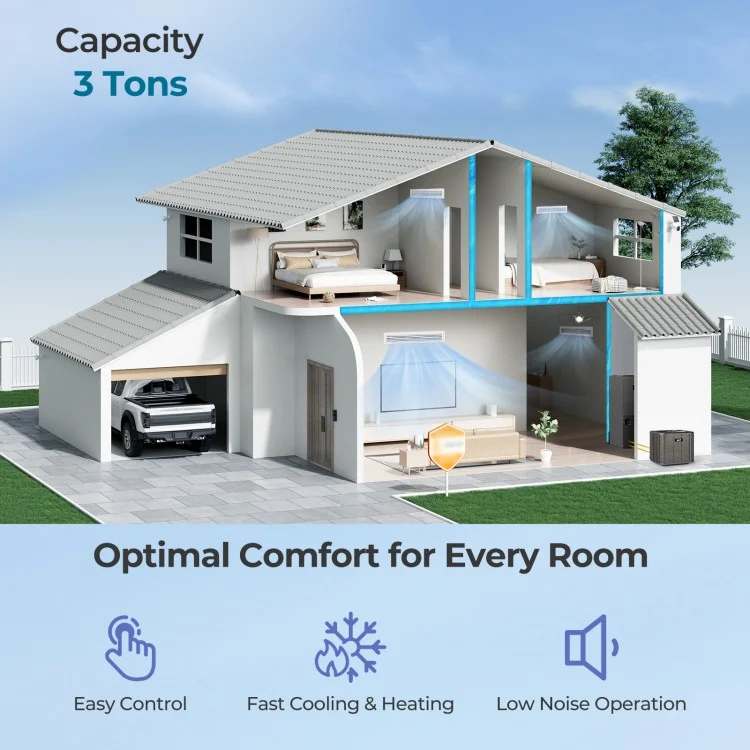














A mini-split is a ductless heating and cooling system that operates without the need for air ducts, using an outdoor compressor and one or more indoor air handlers. In Canada, where long winters drive high energy costs and heating demand, mini splits have become increasingly popular for their ability to efficiently warm homes even in sub-zero temperatures.
Key Takeaways
● Ductless Efficiency: Operates entirely without air ducts, eliminating the 20% to 30% energy loss typical of traditional central heating systems.
● Winter-Ready Heating: Modern Cold-Climate Heat Pumps (ccASHP) can efficiently extract heat even when temperatures drop to -25°C, serving as a reliable primary heat source for Canadian winters.
● Customized Zoning: Available in single-zone (for isolated spaces like basements) and multi-zone configurations (to fix uneven temperatures across an entire older home).
● The Ultimate Retrofit: The perfect, non-invasive climate solution for century homes, garage conversions, and home additions where installing ductwork is impossible.
● Government Rebates: Upgrading to high-efficiency, energy-saving models can qualify you for significant provincial rebates (such as CleanBC or Ontario energy programs) to offset installation costs.
How does a mini split work?
The core of a mini split AC lies in its precise heat transfer function. It uses a closed-loop refrigerant system to exchange heat energy between the indoor and outdoor environments. Due to its "ductless" design, the mini split air conditioner completely eliminates the huge energy losses caused by traditional forced-air systems.
The Refrigerant Cycle Explained
The system relies on a continuous loop of pressure-driven phase changes. The compressor pressurizes the refrigerant into a hot gas, sending it to a coil to release heat and condense into a liquid. This liquid then passes through an expansion valve, where a sudden pressure drop causes its temperature to plummet. As this icy liquid flows through the evaporator coil, it absorbs heat from the surrounding air, turning back into a gas to repeat the cycle.
Heating Mode vs. Cooling Mode (Low-Ambient Performance)
A reversing valve flips the refrigerant flow to switch between cooling and heating, allowing the outdoor unit to extract heat from the outside air and pump it indoors. For Canadians, the game-changer is Cold Climate Air Source Heat Pump (ccASHP) technology. Built to NRCan performance standards, these systems use variable-speed inverters and "vapor injection" to extract heat effectively even at -25°C or below. They routinely deliver 2 to 3 units of heat for every unit of electricity consumed, making them far more cost-effective than electric baseboards during a harsh winter.
How Indoor and Outdoor Units Communicate
The system's "nervous system" is a dedicated communication cable linking the units. The indoor unit constantly monitors the room's temperature and sends real-time digital signals to the outdoor unit's main circuit board. Unlike the primitive "all-on or all-off" logic of older central HVACs, this data tells the inverter compressor exactly how much to adjust its speed. This precise modulation matches the exact heating or cooling load, completely eliminating the massive temperature swings common in older homes.
Pros and Cons of a Ductless Air Conditioner
Before investing in a ductless system, it is important to weigh the long-term benefits against the upfront requirements. While they are incredibly energy-efficient and perfect for homes without ductwork, the initial installation costs and visual impact of the indoor units aren't for everyone.
Pros (Advantages) | Cons (Disadvantages) |
High Energy Efficiency: Inverter technology significantly lowers monthly heating and cooling bills. | Higher Upfront Cost: The initial purchase and professional installation can be expensive. |
No Ductwork Required: Perfect for older homes, basements, or room additions. | Visible Indoor Units: Wall or floor units are visible and alter the room's aesthetics. |
Zoned Comfort: Independent thermostats allow for room-by-room temperature control. | Strict Maintenance: Requires frequent filter cleaning to maintain peak efficiency. |
Year-Round Use: Provides powerful air conditioning in summer and reliable heating in winter. | Complex Layouts: Very large homes with many small rooms may require multiple systems. |
Are There Different Types of Mini-Splits?
Mini split air conditioners are not a one-size-fits-all solution; their biggest advantage lies in their flexibility. Whether it's heating a poorly ventilated basement in Alberta or installing air conditioning in a historic ductless home in Nova Scotia, you can easily customize the system based on the number of areas needed and your preferred installation method.
By Zone
Single-Zone Systems: A single-zone system pairs one outdoor compressor with one indoor unit. It is a highly cost-effective solution for climate control in an isolated area, such as a newly finished basement, a garage workshop, or a drafty sunroom.
Multi-Zone Systems: A multi-zone setup connects one heavy-duty outdoor compressor to multiple indoor units. Because each indoor unit has its own thermostat, you get customized room-by-room temperatures (e.g., a warm living room and a cool bedroom). This type of setup is especially useful for families who want to control temperatures in different rooms independently, such as with a 2 Zone Mini Split. This is an ideal, energy-efficient retrofit for older Canadian homes looking to replace expensive electric baseboards without installing central ductwork.
By Installation Style
Beyond zoning, indoor units come in several designs to suit your room's layout and aesthetic:
● Wall-Mounted Units: The most common and affordable choice. Installed high on a wall, they offer excellent air distribution but require clear, unobstructed wall space.
● Ceiling Cassettes: Installed into the ceiling with only a flush grille visible. They typically provide 4-way airflow, making them perfect for large, open-concept spaces.
● Floor-Mounted Units: Installed low to the ground, resembling traditional radiators. They are ideal for rooms with slanted ceilings or large windows, making them an easy visual transition from old baseboard heaters.
● Concealed Ducted Units: Hidden completely out of sight in a ceiling or closet. They use short duct runs to deliver air through standard grilles, combining ductless efficiency with an invisible aesthetic.
How Do I Know if a Mini-Split is Right for My Space?
A mini-split is typically the ideal choice if you own an older Canadian home without existing ductwork, or if you need independent climate control for a renovated basement or garage conversion. Once you've decided this setup fits your layout, the next step is calculating exactly how much power it needs so your system won't struggle when extreme weather hits.
Sizing and BTUs
You cannot size a mini-split based solely on square footage. To calculate the correct BTUs, you must apply the "Canadian Climate Correction" principle—formally recognized in the industry as the CSA F280 load calculation standard. This requires evaluating your home's entire thermal envelope: insulation quality, window type (single vs. double-glazed), and ceiling height. A poorly insulated room will demand significantly more BTUs to stay warm in January than a well-sealed space of the same size, and in many cases, this is where systems around 18000 BTU start to make more sense for maintaining stable indoor temperatures.
Expert Tip: Once you determine your required BTUs, always choose a Cold-Climate certified model to guarantee reliable heating during extreme weather. For authoritative sizing guidelines, refer to the official Natural Resources Canada (NRCan) Heat Pump Guide.
Single-Zone vs. Multi-Zone Needs
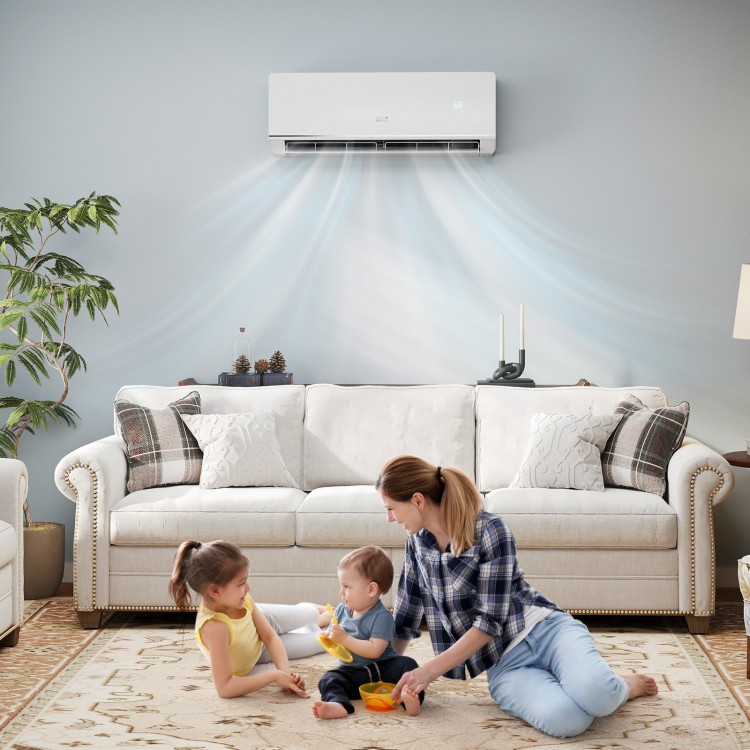
A single-zone system is ideal when you’re focusing on conditioning one specific area, such as a renovated basement apartment, a garage conversion, or a newly added room. In these cases, consistent heating and cooling, energy efficiency, and ease of control are especially important—particularly in colder climates where temperatures can drop significantly in winter.
For example, in a cold basement setting, a unit like the SEERXtreme Series 12000 BTU 24 SEER2 115V Mini Split can be a great fit. It’s designed to maintain reliable heating even when outdoor temperatures fall as low as -25°C, while its high 24 SEER2 efficiency helps keep electricity costs down. Added features like smartphone and voice control also make it convenient to manage comfort in a space that may not be used all the time.
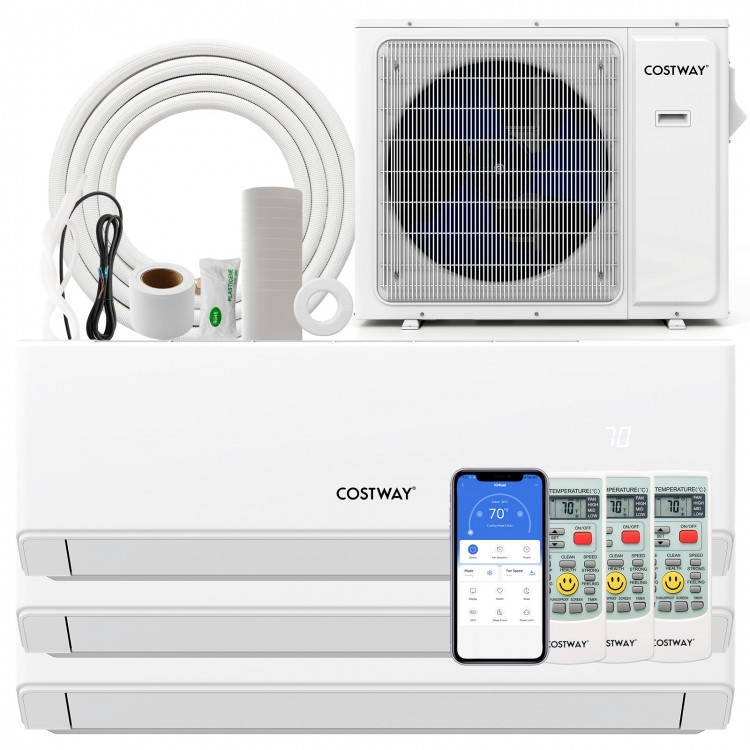
A multi-zone system is a better choice when you’re trying to maintain comfort across an entire home—especially in older two-story houses where temperature differences between rooms can be a real challenge. Upstairs bedrooms may get too warm, while downstairs living areas stay cool, and different family members often have different comfort preferences.
This is where a system that supports multiple independent zones becomes essential. For instance, a unit like the UltrEco Series 30000 BTU 3 Zone 23 SEER2 Mini Split allows you to control up to three separate areas individually, so each room can be set to its ideal temperature. It also operates reliably in extreme conditions ranging from -25°C to 52°C and uses eco-friendly R32 refrigerant—making it a flexible and efficient solution for Canadian retrofit homes.
Home Layout and Existing Ductwork
Finally, carefully examine your home's layout. If your main floor has a modern open-plan layout, a single well-placed indoor unit can effectively regulate the temperature across the entire floor. However, older Canadian homes often have more enclosed layouts, typically requiring multiple indoor units to prevent uneven heating and cooling.
Even if your home already has a ducted system and central heating, split-system air conditioners can serve as an excellent supplementary system. This is the most effective way to solve the common Canadian problem of a cold basement and a hot second floor, without requiring the replacement or modification of your central air conditioning system.
Conclusion
In Canada, mini splits are particularly valuable due to cold-climate heating capabilities, rising energy costs, and the large number of homes without ductwork. Whether you're upgrading an older house, finishing a basement, or looking for a more efficient heating solution, a mini split can be a smart, future-proof investment.
FAQ About Mini Split
Is it Cheaper to Leave a Mini Split on All the Time?
In many cases, yes. Mini splits use inverter technology, which allows them to run at low power continuously rather than cycling on and off. For well-insulated homes, maintaining a steady temperature is often more efficient than frequent start-stop operation. However, if your home has poor insulation (such as older houses), slightly lowering the temperature during extremely cold nights can be more cost-effective.
How Do You Maintain a Mini Split Through a Canadian Winter?
Clear snow/ice from the outdoor unit, clean filters monthly, and check drainage paths. Install a breathable cover in extreme cold, and schedule pre-winter professional maintenance to test defrost cycles and refrigerant levels, ensuring reliable heating.
How to maintain a mini split during Canadian extreme weather?
Yes, extra care boosts longevity. In winter, clear snow buildup and verify defrost cycles; in summer, ensure outdoor units have 2-3 ft clearance for airflow. Increase filter checks (biweekly in peak use) and schedule annual pro inspections to handle Canada's climate stress.
Read More:
Best Split Air Conditioners for 750 to 1250 Square Feet
Heat Pump vs Air Conditioner: Which One Is Better for Your Home?
How often should split system air conditioners be serviced?