









Choosing the best wood for outdoor furniture is not just about appearance. The right wood determines how well your furniture handles moisture, sunlight, temperature changes, and everyday outdoor use. While teak is often considered the premium choice, acacia, cedar, and eucalyptus can also perform well depending on your climate, budget, and maintenance expectations.For homeowners in Canada, wood selection matters even more because outdoor furniture often faces humid summers, rainy coastal conditions, freezing winters, and seasonal storage needs. Understanding how different wood species respond to these conditions can help you make a smarter long-term investment.
Key Takeaways
Teak is often considered the most durable and lowest-maintenance wood for outdoor furniture.
Acacia offers a strong balance of affordability, strength, and natural appearance.
Cedar is naturally resistant to moisture, insects, and decay, making it useful in damp climates.
Eucalyptus is a practical teak alternative with strong performance at a lower price point.
Climate, maintenance level, budget, and outdoor exposure should all influence your wood choice.
Quick Answer: What Is the Best Wood for Outdoor Furniture?
The best wood for outdoor furniture is usually teak if durability and low maintenance are your top priorities. Teak performs well in moisture, sun exposure, and changing temperatures because it contains natural oils that help resist decay.However, teak is also one of the most expensive options. For better value, acacia is a strong choice. For wet climates, cedar is practical. For homeowners who want a teak-like appearance at a more accessible price, eucalyptus is worth considering.
Teak vs Acacia vs Cedar vs Eucalyptus: Which Wood Is Best?
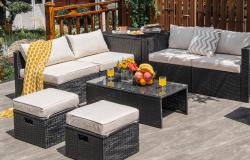
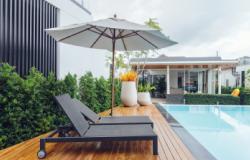
When choosing outdoor furniture wood in Canada for different product types such as patio dining sets, outdoor sectionals, and outdoor umbrella bases, climate resistance, durability, and maintenance requirements all matter.
Teak
Teak is widely considered the premium outdoor wood because of its natural oils, which make it highly resistant to water, rot, and temperature changes. In Canada’s freeze–thaw climate, teak performs exceptionally well, even without heavy maintenance, making it a long-term investment for outdoor furniture.
Best for: High-end outdoor furniture, year-round patios, patio conversation sets, and long-term investment pieces in harsh Canadian climates.
Acacia
Acacia is a dense hardwood that offers a strong balance between durability and affordability. It performs well outdoors but requires regular sealing in Canada’s wet and snowy conditions to prevent cracking and moisture damage over time.
Best for: Budget-friendly outdoor furniture, seasonal patio use, covered decks, and users willing to do periodic maintenance
Cedar
Cedar is naturally lightweight and resistant to rot and insects, making it one of the most popular choices for Canadian outdoor environments. It handles moisture and cold well, but it is softer than other hardwoods and can dent more easily.
Best for: Garden furniture, fences, pergolas, and lightweight outdoor setups in humid or rainy regions of Canada.
Eucalyptus
Eucalyptus is a fast-growing hardwood that offers good strength and an eco-friendly profile. It performs reasonably well outdoors in Canada, but it needs proper sealing to withstand long-term exposure to snow, rain, and freezing temperatures
Best for: Eco-conscious buyers, mid-range patio furniture, seasonal outdoor use, and covered outdoor spaces in Canadian homes.
Sustainable Wood Choices for Canada
After comparing durability and performance, sustainability is another factor worth considering. Outdoor furniture should not only last outdoors but also come from responsible sources whenever possible.
Local vs Imported
Locally sourced wood can reduce transportation impact compared with imported hardwoods. For example, cedar sourced in North America may have a lower shipping footprint than teak imported from tropical regions. That said, imported woods can still be a responsible choice if they come from certified forests or legally managed plantations. The key is to look for clear sourcing information rather than assuming imported wood is always less sustainable.
FSC, SFI, and SVLK Certification
When shopping for outdoor wood furniture, certifications can help verify responsible sourcing. Common labels include:
FSC, which stands for Forest Stewardship Council
SFI, which is used for responsibly managed forests in North America
SVLK, which applies to legally verified Indonesian timber
Not every product will list all certifications, but a clear sourcing statement is a good sign.
Carbon Footprint Comparison
Generally speaking, local or regional woods tend to have a lower transportation footprint, while imported hardwoods may require more shipping. However, lifespan also matters. A longer-lasting piece of furniture may reduce replacement frequency over time.
Choosing certified wood products can help reduce environmental impact regardless of which wood species you select.
Which Wood Is Best for Your Outdoor Space?
Once you understand how each wood performs, the next step is matching the material to your actual outdoor space. A small condo balcony has different needs from a large backyard deck or an exposed patio.
Best Wood for Small Patios & Balconies
Many Canadian homes, especially condos, townhouses, and urban properties, have limited outdoor space. Foldable wooden furniture offers a practical solution by providing comfortable seating without permanently taking up valuable patio or balcony space. A compact set like the 3 Pieces Folding Wooden Picnic Table Bench Set can easily be stored away when not in use while still providing plenty of room for outdoor dining and entertaining.
Key features include:
Space-saving folding design that sets up in seconds and folds flat for convenient storage.
3-piece set with seating for up to 4 people, ideal for family meals, casual gatherings, or outdoor entertaining.
Solid fir wood tabletop with a natural wood-grain appearance for a warm, rustic look.
Powder-coated steel frame with X-shaped crossbars for enhanced durability and stability.
Spacious 70" tabletop that provides ample room for food, drinks, and outdoor dining essentials.
Portable and versatile, suitable for patios, balconies, picnics, camping trips, backyard parties, and beer garden-style gatherings.
Easy-clean surface that can be wiped down quickly after use.

Best Wood for Large Decks & Backyard Spaces
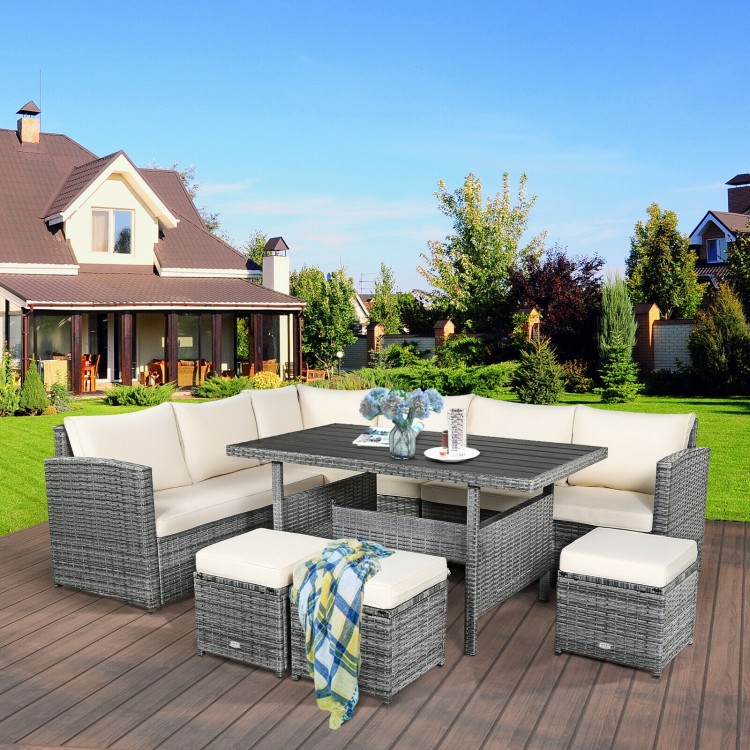
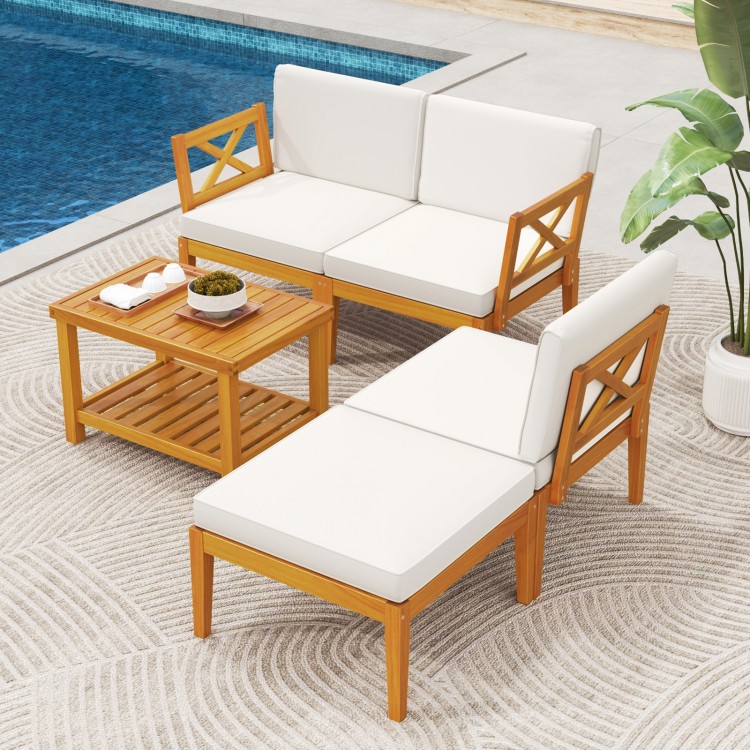
Large decks and backyards can support heavier and more substantial furniture, such as dining sets, sectionals, and loungers. Acacia and teak are strong choices for these spaces because their density and structural strength work well for larger furniture designs. For homeowners who want a warm natural look with flexible seating, the 5 Pieces Acacia Wood Patio Furniture Set with 2-Tier Coffee Table and Cushions is a practical option for larger outdoor areas.
Made from solid acacia wood, this patio set provides a durable foundation for everyday outdoor relaxation. Its modular design allows you to arrange the sofa pieces in different layouts, making it suitable for family gatherings, backyard conversations, poolside lounging, or casual weekend entertaining.
Key features include:
Solid acacia wood construction that offers strength, stability, and a natural outdoor appearance.
5-piece modular design with a right arm sofa, left arm sofa, armless sofa, ottoman, and coffee table for flexible arrangement.
Soft cushions that provide comfortable support for longer lounging or outdoor conversations.
Removable and washable cushion covers for easier cleaning and maintenance.
2-tier coffee table that offers extra space for drinks, snacks, books, or decorative items.
Natural wood grain that blends well with decks, gardens, porches, backyards, and poolside areas.
A versatile layout that can be adjusted for both intimate family use and larger outdoor gatherings.
Regular oiling recommended to help maintain the acacia wood surface and extend outdoor durability.
Best Wood for Covered Patios & Pergolas
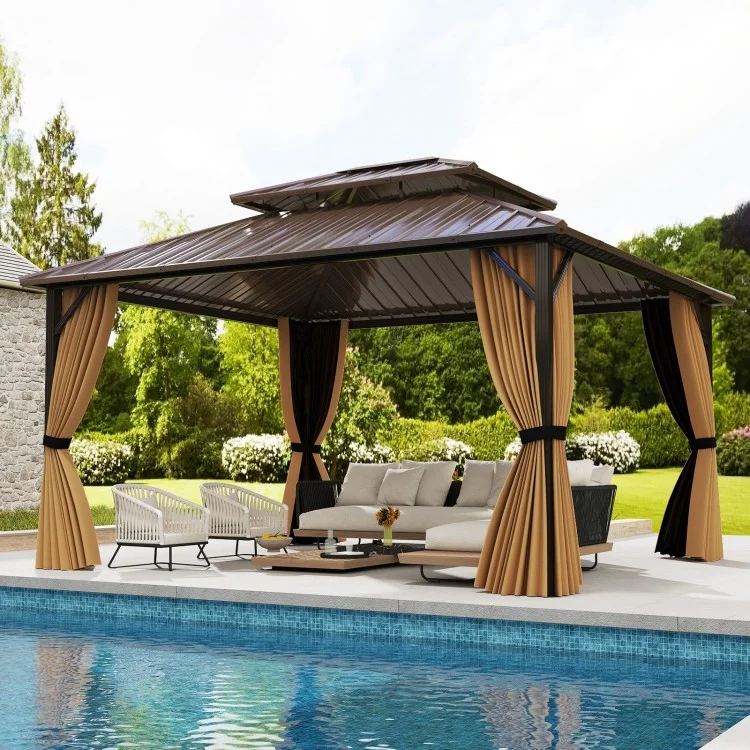
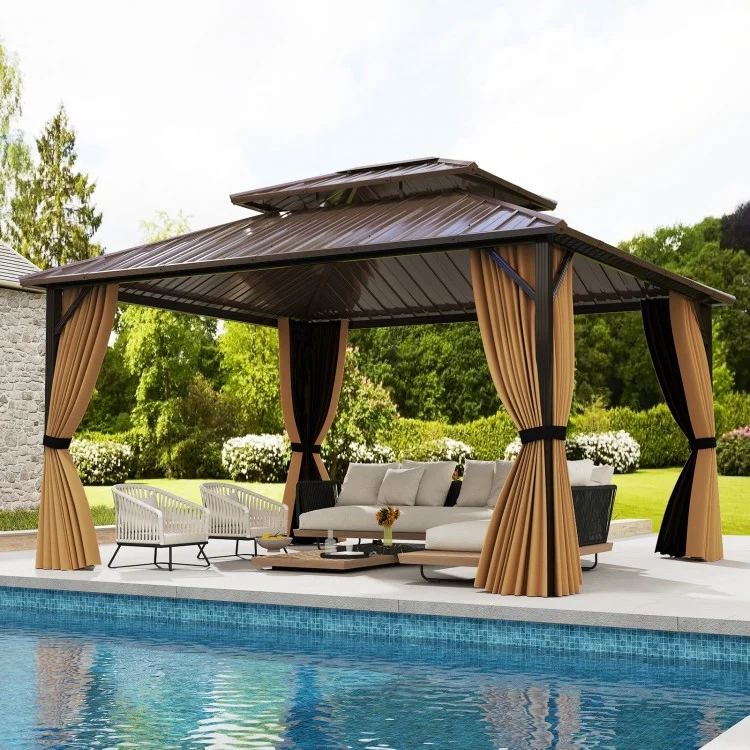
Covered patios and pergolas give wooden outdoor furniture extra protection from direct rain, snow, and strong sunlight. This makes acacia and eucalyptus good choices for covered outdoor areas, as they offer a warm hardwood appearance while benefiting from added shelter. A structure like the 14 x 12 FT Hardtop Gazebo Outdoor Pergola can help create a more comfortable space for outdoor dining, relaxing, and entertaining while also helping protect wooden patio furniture from seasonal weather exposure.
Key features include:
Large 14 x 12 ft covered area, ideal for patios, decks, gardens, backyards, and poolside spaces.
Galvanized double-layer hardtop roof that provides shade, rain protection, and better airflow.
Heavy-duty aluminum frame with anchoring plates for added outdoor stability.
Mesh netting and zippered curtains for ventilation, privacy, and insect protection.
Ceiling hook for adding a light, fan, or decorative accent.
Helps reduce direct sun, rain, and snow exposure for wooden outdoor furniture.
Best Wood for Exposed Outdoor Spaces
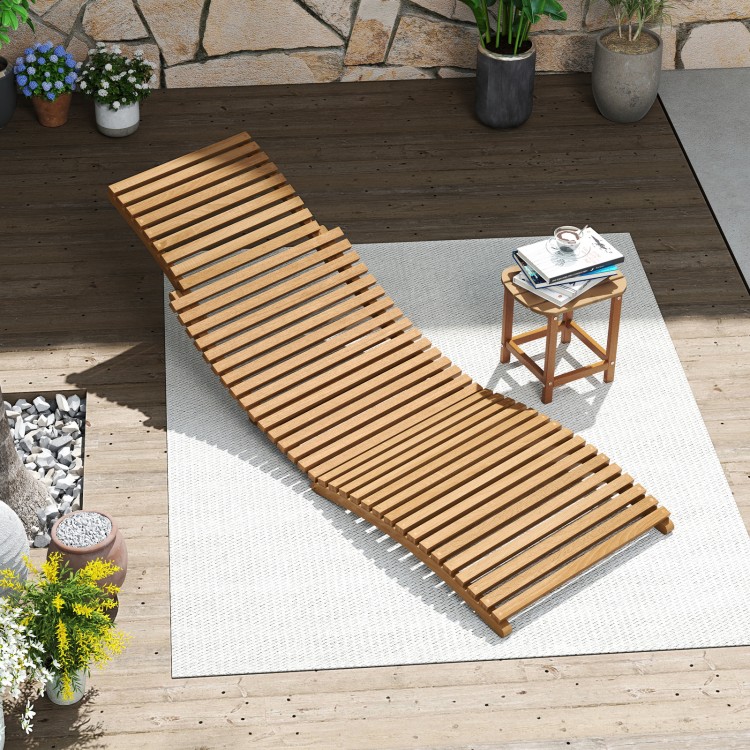
Furniture placed in fully exposed areas needs stronger weather resistance. Rain, snow, sunlight, and humidity can all shorten the lifespan of outdoor wood if it is not properly maintained. Teak remains one of the strongest choices for exposed outdoor spaces because of its natural durability and resistance to moisture. A piece like the Teak Wood Patio Folding Chaise Lounge Chair with Slatted Seat is a practical option for poolside areas, backyards, porches, and sunny outdoor spaces where both comfort and durability matter.
Key features include:
Selected teak wood construction with a strong, crack-resistant, and splinter-free surface.
Folding design that makes the chaise lounge easy to store, move, or put away during the off-season.
Full-length ergonomic seat that supports the head, neck, back, waist, hips, and legs.
Slatted seat design that creates a classic outdoor look while allowing better airflow.
Fully assembled design with no complicated setup required.
Suitable for poolside areas, backyards, porches, beaches, and other outdoor relaxation spaces.
Regular oiling is recommended to help maintain the teak wood surface and extend service life.
Best Wood for Urban Apartment Balconies & Condos
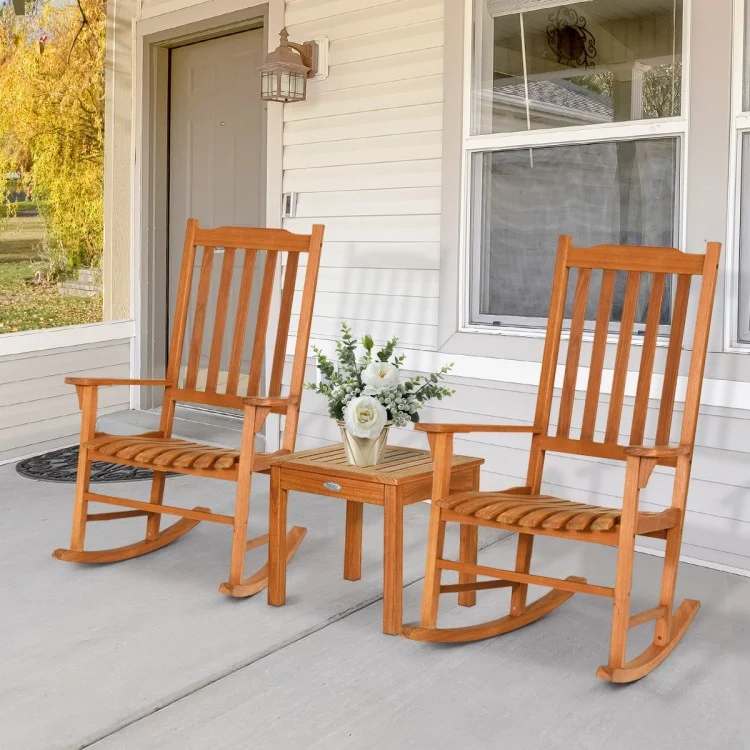
Urban balconies often require furniture that is compact, easy to move, and simple to store. Eucalyptus and cedar are good options because they balance durability, weight, and natural outdoor appeal. For apartment and condo living, a compact set like the 3 Pieces Eucalyptus Rocking Chair Set with Coffee Table offers a comfortable place to relax without overwhelming limited balcony space.
Key features include:
3-piece set with two eucalyptus wood rocking chairs and one coffee table, ideal for two people.
Selected eucalyptus wood construction for stable and durable outdoor use.
Compact layout suitable for city balconies, condos, patios, courtyards, gardens, and poolside areas.
Ergonomic rocking chairs with wide seats, backrests, and armrests for comfortable relaxation.
Natural wood texture that adds a warm and simple outdoor look.
Fade-resistant linseed oil varnish for easier cleaning and better weather resistance.
Easy assembly and flexible placement for small outdoor spaces.
Choosing Wood for Canadian Winter Climates
After selecting the right wood for your space, it is important to consider how it will perform during winter. In Canada, outdoor furniture may face freezing temperatures, snow, moisture, and repeated freeze-thaw cycles.
How Cold Weather Affects Outdoor Wood
Wood naturally expands and contracts as temperature and moisture levels change. During winter, moisture trapped inside the wood can freeze and expand, increasing the risk of surface cracking, warping, loose joints, and finish damage.Dense hardwoods such as teak and acacia generally resist these issues better than softer woods because they absorb less moisture.
How Different Woods Respond to Snow, Rain, and Humidity
Teak is the most resilient option for year-round outdoor exposure. Cedar performs well in wet conditions because of its natural moisture resistance. Acacia and eucalyptus also offer strong performance but benefit from seasonal oiling and protective covers.
Recommended Wood by Canadian Region
Different regions experience different weather patterns, so the best wood choice may vary.
British Columbia
Best choices: Cedar, teak
Why: Strong moisture resistance is useful in rainy coastal climates.
Ontario and Quebec
Best choices: Acacia, teak, eucalyptus
Why: These woods balance durability and value across four-season weather.
Prairie Provinces
Best choices: Teak, cedar
Why: These woods handle temperature swings and dry winter conditions better than many lower-grade woods.
Atlantic Canada
Best choices: Cedar, teak
Why: Moisture resistance matters in humid and coastal environments.
Regardless of region, using covers and storing cushions indoors can help extend furniture lifespan.
How to Maintain Wooden Outdoor Furniture
Choosing the best wood for outdoor furniture is only part of the decision. Proper maintenance helps preserve appearance, improve durability, and maximize long-term value.
How Often Should You Oil Outdoor Wood Furniture?
The right schedule depends on the wood species and the look you want.
If you prefer a naturally weathered look, teak can be left untreated and will gradually develop a silver-gray patina.
How to Prevent Cracking, Fading, and Warping
Outdoor wood furniture can last for many years when properly cared for. To help prevent cracking, fading, and warping, apply an outdoor furniture oil or protective sealant according to the manufacturer's recommendations. Avoid allowing water to pool on tabletops or seating surfaces, as prolonged moisture exposure can damage the wood over time. During extended periods of rain, snow, or harsh weather, using furniture covers can provide additional protection. Cushions should be stored separately when not in use to reduce moisture retention and mildew growth. Before winter arrives, thoroughly clean and dry your furniture before placing it in storage. These simple maintenance practices are particularly important in regions with significant seasonal temperature and humidity changes.
Final Thoughts
The best wood for outdoor furniture depends on your priorities, climate, budget, and maintenance expectations. Teak remains the premium choice for long-term durability and lower maintenance, while acacia offers excellent value for homeowners who want strength and natural beauty at a more accessible price. Cedar is a practical choice for moisture-prone environments, and eucalyptus delivers many of teak’s benefits at a lower cost. By matching the wood species to your outdoor space and care routine, you can choose furniture that stays attractive and functional for years.
FAQs
What's the Best Wood for Canadian Winters?
Teak is generally the best wood for Canadian winters because it resists moisture, decay, and temperature changes well. Cedar is also a strong option in wet regions, while acacia and eucalyptus perform well with regular maintenance and protective covers.
Should I Buy Local Cedar or Imported Teak?
Local cedar is a good choice if you want a lighter wood with moisture resistance and a lower transportation footprint. Imported teak is better if you prioritize long lifespan, premium durability, and lower maintenance over upfront cost.
Where Can I Buy Canadian-Certified Outdoor Wood in Canada?
Look for retailers that provide FSC, SFI, or other recognized certification information in their product descriptions. Specialty outdoor furniture stores, home improvement retailers, and brands with transparent sourcing policies are good places to start.
How Much Maintenance Does Outdoor Furniture Need in Winter?
Outdoor furniture needs moderate winter preparation rather than constant maintenance. Clean it before storage, let it dry fully, use protective covers, and store cushions indoors to reduce moisture damage, cracking, and mildew.