










Ice makers are one of those everyday appliances we rarely think about—until they stop working. If you’ve ever wondered “how does an ice maker work?”, the answer is simpler than it seems. Whether you're using a refrigerator ice maker or a portable countertop unit, all ice makers follow a similar process: filling, freezing, detecting, and releasing ice. In this guide, we’ll break down exactly how an ice maker works step by step, explain the differences between types, and help you choose the right one for your needs.
Key Takeaways
An ice maker operates through a repeating cycle of filling water, freezing it, detecting ice formation, ejecting ice, and refilling automatically.
All ice makers share the same core mechanism but differ in water source, installation requirements, ice shape, and production capacity depending on the model type.
The main components—including the water supply system, ice mold, thermostat sensor, heating element, ejector mechanism, and storage bin—work together to automate ice production.
Portable, refrigerator, and commercial ice makers differ in speed, output volume, and installation complexity, but all are designed to produce ice continuously with minimal user input.
What Is an Ice Maker? (Basics You Need to Know)
An ice maker is a convenient, automated device designed to produce ice without the hassle of manual water filling and freezing—no more refilling ice trays and waiting hours for them to solidify in your freezer. You’ll find these handy machines in three common forms: built into modern refrigerators, as compact portable countertop units, or as standalone undercounter or commercial models. Whether you’re grabbing a cold drink at home, hosting a party, or running a café, their core purpose remains the same: to turn water into ice efficiently, consistently, and with minimal effort on your part.
Key Components of Any Ice Maker
No matter which type of ice maker you choose, they all rely on a set of essential components to function. Understanding these parts will make it easier to grasp the full process—and even troubleshoot small issues down the line. Here’s what you need to know:
Water Supply System – This delivers water to the ice mold, either from a direct water line (for built-in/commercial models) or an internal, refillable reservoir (for portable units).
Inlet Valve – A small but crucial part that controls the flow of water into the ice mold. It opens when the machine needs more water and closes to prevent overflow.
Ice Mold or Tray – The “mold” where water freezes into ice. Its shape (cube, bullet, flake, etc.) determines the type of ice the machine produces.
Thermostat or Sensor – Acts as the “brain” of the ice maker, detecting when the water in the mold has fully frozen into solid ice. Once frozen, it triggers the next step in the cycle.
Heating Element – A small, low-wattage element beneath the ice mold. It briefly warms the surface of the mold to loosen the ice cubes, making them easy to eject without sticking.
Ejector Mechanism – Usually an arm or rotating paddle that pushes the loosened ice out of the mold and into the storage bin.
Storage Bin – A built-in compartment that holds the ice until you’re ready to use it. Most bins have a sensor to stop production once they’re full, preventing overflow.
How Does an Ice Maker Work? (Step-by-Step Process)
Ice makers operate in a simple, repeating cycle that runs automatically—no manual intervention needed once the machine is set up. Here’s a detailed, step-by-step breakdown of how that cycle unfolds, from water to ice:
Step 1 – Water Filling: The Cycle Begins
The process starts when the ice maker’s sensor detects that the storage bin is low on ice (or empty). It sends a signal to the inlet valve, which opens to allow a precise amount of water to flow into the ice mold. For built-in refrigerator models, this water comes directly from your home’s water line; for portable units, it’s drawn from the internal reservoir you’ve refilled.
Step 2 – Freezing the Water: Turning Liquid to Solid
Once the mold is filled, the inlet valve closes and the refrigeration system activates to rapidly cool the mold. The thermostat drives the temperature well below freezing—typically between 0°F and 10°F. This extreme cold is critical to quickly freeze the water into completely solid ice, preventing any slushy centers.
Freezing times depend on the machine: portable countertop units can churn out a batch in just 6–10 minutes, while standard refrigerator ice makers take 90–120 minutes to create larger, denser cubes.
Step 3 – Ice Formation Detection: Knowing When It’s Ready
While the water is freezing, the thermostat or sensor continuously monitors the temperature of the ice mold. When the ice reaches the ideal hardness (fully frozen, not slushy), the sensor sends a signal to the machine to move to the next step: harvesting the ice.
Step 4 – Ice Harvesting (Ejection Process): Getting the Ice Out
To release the ice from the mold (which can stick due to freezing), the machine activates the heating element beneath the mold for a few seconds. This gentle warmth melts the thin layer of ice touching the mold, loosening the cubes (or bullet ice, flakes, etc.). Immediately after, the ejector mechanism—usually a rotating arm or paddle—pushes the ice out of the mold and into the storage bin. The heating element then shuts off, and the mold is ready for the next cycle.
Step 5 – Storage and Refill Cycle: Keeping Ice On Demand
Once the ice drops into the storage bin, the machine checks if the bin is full (using a sensor or float switch). If it’s not full, the cycle restarts immediately: the inlet valve opens, water fills the mold, and the process repeats. This continuous loop ensures you always have a steady supply of fresh ice, without having to lift a finger.
Types of Ice Makers
While all ice makers follow a similar basic process, they’re categorized by their design, capacity, and use case. Here’s a breakdown of the three main types to help you identify which one fits your needs:
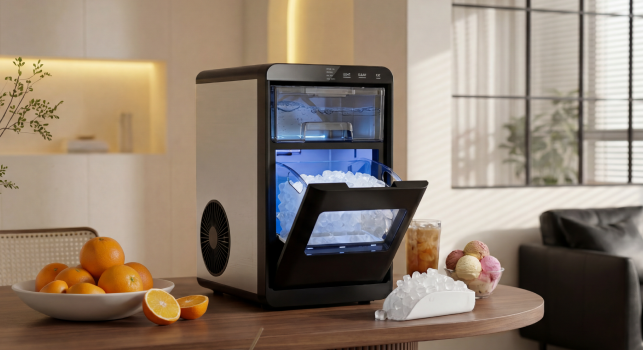
Choosing the right ice maker boils down to three main factors: how much space you have, how much ice you need, and what kind of drinks you prefer. Match the machine’s daily output to your lifestyle and kitchen footprint: For Occasional Use & Small Spaces: Portable countertop models are your best bet. They fit anywhere, require no water lines, and produce enough ice for daily drinks. For Frequent Entertaining: You need a built-in or undercounter unit capable of churning out 20–50 pounds of ice daily. If you hate running out of ice mid-party but want to keep your counters clear, a dedicated model like the 115V Free-Standing Undercounter Built-In Ice Maker is a perfect fit. It slides seamlessly under standard cabinetry, and thanks to its self-cleaning function, you get endless ice without the tedious post-party cleanup. For Commercial Settings: Standalone machines are required for restaurants or cafes, producing hundreds of pounds continuously. Pro Tip: Always measure before you buy. Portable units need 12–18 inches of counter width, while undercounter models require a dedicated 24–30 inch gap. The shape and density of your ice dictate how it affects your beverages. Clear Ice (Best for Premium Drinks): It is dense, completely transparent, and melts very slowly. It won’t quickly water down your bourbon, craft cocktails, or iced coffee. You’ll typically find clear ice in higher-end undercounter or commercial machines. Bullet & Nugget Ice (Best for Everyday Use): Made in portable units, this ice freezes exceptionally fast (6–10 minutes). It is light, soft, and easy to chew, making it perfect for iced tea, sodas, and smoothies. If you're a fan of that classic, Sonic-style chewable ice, checking out a plug-and-play model like the Self-Dispensing Nugget Ice Maker Countertop is a no-brainer—it drops soft pellet ice straight into your glass without any complicated plumbing required. Beyond the key factors above, these additional considerations can help you make a more informed choice: Water source: Portable units often use manual filling, while built-in models may require a direct water line. Ice storage capacity: Larger bins reduce how often you need to empty or transfer ice. Proper maintenance is key to keeping your ice maker running efficiently, extending its lifespan, and ensuring your ice tastes fresh (no weird odors or mold!). Here are simple, actionable tips to follow: Clean your ice maker every 1–2 weeks to prevent mold, bacteria, and mineral buildup (which can clog the system and affect ice taste). For most models, mix equal parts water and white vinegar (or a manufacturer-recommended cleaner), pour it into the reservoir, run a cleaning cycle, then rinse thoroughly with clean water. Don’t forget to wipe down the storage bin and ice mold with a soft cloth. If your ice maker has a water filter (common in built-in models), replace it every 6–12 months (check the manufacturer’s instructions). A clean filter removes impurities from the water, resulting in better-tasting ice and preventing clogs in the inlet valve or ice mold. Avoid overfilling the water reservoir (for portable units)—this can cause overflow and damage the machine. Keep the machine in a well-ventilated area. Portable ice makers, in particular, need airflow to cool properly—don’t place them in tight cabinets or near heat sources (like stoves or microwaves). Empty unused ice from the storage bin every 24–48 hours. Old ice can clump together, absorb odors from the surrounding area, or even develop bacteria. At first glance, ice makers might seem complex—but their operation boils down to a simple, repeating cycle: fill, freeze, detect, eject, and repeat. Whether you’re using a built-in refrigerator ice maker, a portable countertop unit, or a commercial machine, understanding how they work helps you choose the right one for your needs and keep it running smoothly for years. With the right maintenance (regular cleaning, filter replacement) and setup, your ice maker will provide a steady supply of fresh, cold ice whenever you need it—no more manual ice trays, no more waiting, just convenience at the touch of a button. It connects directly to your home’s water supply through a dedicated water line. This line is usually connected to the back of the fridge and feeds water to the ice maker automatically when it needs to refill the mold. Common causes include a blocked or kinked water line, a faulty inlet valve (won’t open to let water in), a dirty or clogged water filter, or a freezer temperature that’s too high (needs to be below 10°F / -12°C to freeze water). Check these first before calling a repair person. Built-in refrigerator ice makers and commercial models do require a direct water line for continuous operation. However, portable countertop ice makers use a refillable internal reservoir—no water line needed. Yes! Portable ice makers have their own built-in refrigeration systems, so they don’t need to be placed in a separate freezer. They plug into a standard power outlet and cool the ice mold internally to freeze water.How to Choose the Right Ice Maker for Your Needs?
Capacity vs. Space
The Ice Type: Clear vs. Bullet/Nugget
Other Factors to Consider
Tips to Maintain Your Ice Maker
Regular Cleaning Routine
Water Filter Replacement
Proper Usage Tips
Conclusion
FAQ
How does a refrigerator ice maker get water?
Why is my ice maker not making ice?
Do ice makers need a water line?
Can an ice maker work without a freezer?