

















Choosing the right system for year-round comfort leads to the classic heat pump vs air conditioner debate. Ultimately, a heat pump shines for homes needing heating and cooling, prioritizing energy savings, or located in moderate climates. Conversely, an air conditioner remains ideal for scorching regions, houses with existing heating setups, or situations where initial cost is the primary concern.
Key Takeaways
• Heat pumps excel in mild to moderate climates (-1°C to 15°C) for simultaneous heating and cooling efficiency.
• Air conditioners prioritize powerful cooling performance and lower upfront costs in hot, dry climates (29°C+).
• Heat pumps require backup heating systems below -15°C, reducing efficiency but remaining more cost-effective than electric baseboards.
• Ductless mini-split heat pumps offer zoned climate control for older homes or unconventional layouts without ductwork.
• Government rebates and carbon tax offsets significantly improve heat pump long-term cost competitiveness in Canada.
How Does a Heat Pump Work?
A heat pump is a versatile all-in-one system. Unlike a furnace that generates heat, a heat pump transfers it using a reversing valve. In summer, it acts exactly like an air conditioner. In winter, even in freezing Canadian temperatures, it extracts ambient heat from the outdoor air and moves it indoors. Modern Cold Climate Heat Pumps (CCHP) can now operate efficiently down to -25°C.
Types of Heat Pumps
• Air-Source Heat Pumps: The most common type, using outdoor air as the heat source/sink. They're efficient in mild to moderate climates.
• Geothermal (Ground-Source) Heat Pumps: Use the stable temperature of the ground or water to transfer heat. More efficient but costlier to install.
• Ductless Mini-Split Heat Pumps: No ductwork required; ideal for room additions, older homes, or zoned heating/cooling.
How Does an Air Conditioner Work?
An air conditioner is designed only to cool your home. It uses a refrigerant cycle to absorb heat from indoor air, compress the refrigerant to release the heat outdoors, and circulate cooled air back inside. Most central ACs rely on ductwork, while window or portable units are self-contained.
Common Air Conditioning Configurations
• Central AC: Cools the entire home via ducts; requires a furnace or boiler for heating.
• Window Units: Compact, single-room cooling; easy to install but less efficient.
What's the Difference Between a Heat Pump and an Air Conditioner?
In Canada, the visual difference between a central heat pump and a central AC is minimal—both look like a metal box sits outside your home. However, the internal mechanics are world apart.
While an Air Conditioner is a "one-way street" designed solely to move heat from inside your home to the outdoors, a Heat Pump is a "two-way street." Thanks to a reversing valve, it can flip the cooling process to extract heat from the freezing Canadian air and pump it indoors. In short: a heat pump is an AC that can also handle your heating needs.
Quick Comparison: Heat Pump vs. AC (Canadian Context)
Feature | Heat Pump | Air Conditioner |
Function | Cools and heats | Cools only |
Heating Method | Transfers heat (no fuel combustion) | Requires separate heating system (e.g., furnace) |
Efficiency in Cold Climates | Less efficient below -15°C; may need backup heat | / (heating handled separately) |
Initial Cost | Higher (includes heating capability) | Lower (cooling only) |
Long-Term Savings | High (one system for all seasons) | Moderate (separate heating system costs extra) |
What Are the Pros and Cons of Heat Pumps vs Air Conditioners?
To help you decide, let’s weigh the long-term benefits of a heat pump against the immediate affordability of a standard air conditioner.
Heat Pumps
Pros:
• Year-Round Comfort: One single unit manages your home’s temperature 365 days a year.
• Government Backing: Eligible for the Canada Greener Homes Loan (up to $40,000 interest-free) and provincial rebates (like Ontario's HER+ or BC's CleanBC).
• Eco-Friendly: Drastically reduces your household’s carbon footprint by moving away from fossil fuel combustion.
• Quiet Efficiency: Modern inverter technology allows the unit to run at lower, quieter speeds once the target temperature is reached.
Cons:
• Upfront Cost: Usually 20-30% more expensive than a standard AC before rebates.
• Electrical Upgrades: Older Canadian homes may require a panel upgrade to 200A to handle the heating load.
Air Conditioners
Pros:
• Lower Initial Price: The most affordable option if you already have a reliable, relatively new gas furnace.
• Proven Simplicity: Fewer moving parts mean they are easy to service and have a long history of reliability in high-heat environments.
• Powerful Dehumidification: Excellent at dropping indoor humidity during those "sticky" July heatwaves in the GTA or Montreal.
Cons:
• Partial Investment: You’re only paying for half a solution. You still rely on a furnace that may be subject to rising carbon taxes.
• No Rebates: You miss out on the thousands of dollars in federal and provincial "green" subsidies.
How to Choose the Right System for Your Home
To pick between a heat pump and an AC, consider these factors:
Climate
• Mild to moderate winters (-1–15°C): Heat pump is perfect. It efficiently handles both heating and cooling, eliminating the need for separate systems. Ideal for coastal BC, southern Ontario, and Atlantic Canada’s shoulder seasons.
• Cold climates (-15°C to -4°C): Heat pumps remain the smart choice. Modern cold-climate models thrive here, delivering 2–3x the efficiency of electric baseboards—even at -4°C. Only in rare prolonged spells below -20°C might you pair with a small backup (gas/oil), but this hybrid setup still outperforms all-gas systems in energy savings. (Myth busted: -4°C is NOT a reason to ditch heat pumps!)
• Hot, dry summers (29°C+): AC excels at powerful cooling, but heat pumps match this performance while adding winter heating. For homes wanting year-round comfort (e.g., southern Ontario, prairie hotspots), heat pumps eliminate the “seasonal switch” hassle.
• Extreme northern zones (prolonged -20°C+): Pair a heat pump with a gas/oil furnace for backup. Still, the heat pump handles most winter days, cutting emissions and energy use vs. all-fossil fuel systems.
Home Size & Layout
• Insulation first: Our building codes emphasize insulation, so a well-sealed home maximizes heat pump efficiency (less energy wasted). Poorly insulated spaces may need zoned systems.
• Ducted vs. ductless: Older homes with ducts suit central heat pumps; newer builds or additions benefit from ductless mini-splits (ideal for multi-level layouts).
• Square footage: Larger homes may need multiple heat pump units (zoned cooling/heating) to avoid overworking a single system—critical in Canada’s wide temperature swings.
Budget
• Government rebates: Federal (e.g., Greener Homes Grant) and provincial programs (Ontario’s Home Energy Savings, Alberta’s Energy Efficiency Programs) can cover 25–50% of upfront costs.
• Carbon tax offsets: Using a heat pump reduces fossil fuel use, lowering your carbon tax burden over time.
• Energy vs. money: Heat pumps save energy(key for eco-conscious households) and dominate electric baseboards (2–3x cheaper to run). Compare against your current system: if you use electric heat, the switch pays off fast; with gas, focus on rebates + long-term carbon savings.
Lifestyle & Usage
• All-in-one comfort: Heat pumps offer seamless heating/cooling—perfect for Canada’s shoulder seasons (spring/fall) with wild temperature swings. No need to switch between systems.
• Existing setups: If you have a gas furnace, consider a hybrid heat pump(uses gas only in extreme cold), avoiding full replacement costs.
• Eco priorities: With rising carbon taxes and net-zero goals, heat pumps cut emissions by 50–70% vs. gas furnaces—a big win for families focused on sustainability.
• Usage patterns: If you rarely use AC (e.g., coastal B.C.), a heat pump still justifies its cost for winter heating. In hot spots like southern Ontario, its dual function is a no-brainer.
Ready to Upgrade? Top Costway Solutions for Your Home
Whether you choose a heat pump or an AC, selecting a reliable, high-performance brand is key. Based on our testing, here are the best Costway solutions tailored to your needs:
Best for Year-Round Efficiency: Heat Pumps
If you live in a moderate Canadian climate—say, parts of British Columbia or Southern Ontario—and you're looking for a single solution that handles both summer heat and winter chill, a heat pump is your ultimate companion. Costway heat pumps are designed for homeowners focused on long-term energy savings, boasting impressive efficiency ratings and ultra-quiet operation that lets you enjoy the peace of your home without the constant hum of traditional units.
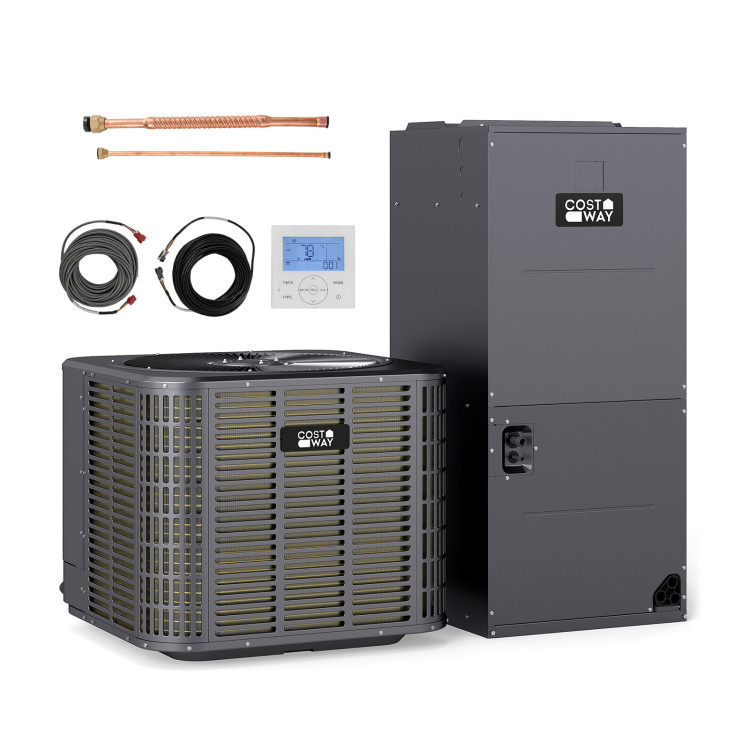
The 2 Ton 18 SEER2 High-Performance Heat Pump System is a fantastic choice for navigating our unpredictable Canadian seasons. Its robust outdoor unit delivers powerful heating down to -15°C and reliable cooling up to 50°C, so whether you're facing a sudden spring snow flurry or a scorching July heatwave, you're covered. The advanced inverter technology automatically adjusts output for precise, steady comfort without the jarring on-off cycles of older systems, while the excellent efficiency ratings help keep energy bills in check. Plus, flexible installation options make it a straightforward replacement for many existing central AC systems.
Best for Maximum Cooling Power: Air Conditioners
For those in hotter, drier parts of Canada—like the Okanagan Valley or southern Alberta—where powerful cooling is the priority, a dedicated air conditioner is the way to go. Costway ACs are celebrated for their durable construction and strong cooling output, delivering the chill you crave without breaking the bank.
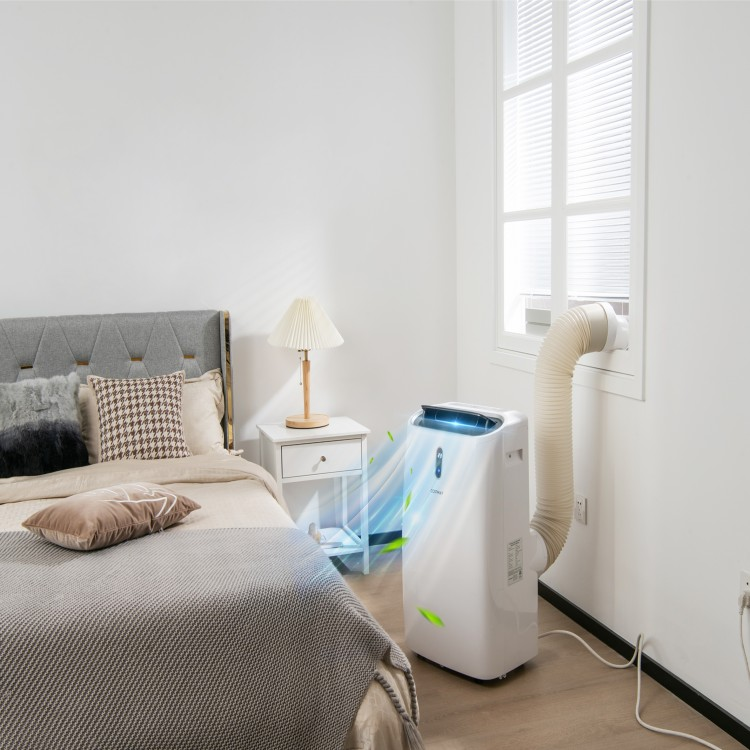
When you need a versatile option that moves with you from room to room, the 12000 BTU Portable Air Conditioner with Smart App Control is a real gem. This 4-in-1 unit combines cooling, heating, fan, and dehumidifying functions, making it a wonderful helper for any home. With powerful 12000 BTU cooling capacity, it can quickly cool a 450-square-foot space—perfect for a main-floor living area or a finished basement. Smart WiFi control lets you adjust the temperature from anywhere using the Smart Life App, while the quiet operation and sleep mode ensure a restful night. Four universal casters make it easy to move and tuck away when not in use.
The Ultimate Problem-Solver: Costway Ductless Mini-Splits
Sometimes, a traditional central system just isn't the right fit—especially in older Canadian homes where adding ductwork would mean tearing into walls. Whether you're finishing a basement, adding a sunroom, or converting a garage into a workshop, ductless mini-splits offer a flexible solution with zoned temperature control exactly where you need it.
The 12000 BTU 17 SEER2 Ductless Mini Split Air Conditioner fits beautifully into this category. Much like how a well-placed wishing well adds a charming touch to a garden, this unit adds effortless comfort to spaces that central HVAC can't easily reach. Designed to provide rapid cooling and heating for rooms up to 750 sq. ft., it's perfect for a cozy home office or a spacious family room. With five operation modes and whisper-quiet inverter technology—below 41 dB—it adapts to whatever the Canadian weather throws your way. The self-cleaning function and washable filter also make maintenance a breeze.

Conclusion
Choosing between a heat pump and an air conditioner depends on your climate, budget, and comfort needs. If you want a single, energy-efficient system for all seasons, go with a heat pump. If you live in a hot area, have a reliable heating system, and need to save on upfront costs, an air conditioner is the way to go.
Whichever you choose, Costway offers high-quality, user-friendly options to keep your home comfortable year-round.
FAQs
Is a heat pump better than an AC in hot climates?
In very hot climates (consistently above 32°C), a dedicated AC may cool more powerfully. However, modern heat pumps perform well in most hot regions and add heating value—plus, in Canada, they offer an efficient solution for our varied climate, handling summer heat while providing reliable heating during milder winters.
Do heat pumps use more electricity than AC?
No—when cooling, heat pumps and ACs use similar energy. But in winter, heat pumps are far more efficient than electric heaters (the most common backup for ACs). For Canadian homeowners, this means significant savings on heating bills, especially when paired with a dual-fuel system for those deep-freeze days.
Can a heat pump replace an air conditioner?
Yes! A heat pump acts as an AC in summer, so it can fully replace one. Better yet, in many parts of Canada, it serves as a year-round solution—keeping you cool in July and warm in November without the need for a separate furnace or boiler.
What is the downside of a heat pump?
The main downsides are higher upfront cost and reduced efficiency in extreme cold. In Canadian winters, when temperatures plunge below -15°C, a backup heating source may be needed. That said, with federal rebates and improving cold-climate technology, heat pumps are becoming a smart investment for most Canadian homes.